In June of 1869, a thirty-one-year-old drifter with a divinity-school dropout’s vocabulary and no fixed plans took a job he was almost comically unsuited for: helping drive a couple thousand sheep into the high Sierra for the summer grazing. John Muir despised the sheep — “hoofed locusts,” he’d call them — but the job carried him up into the range he would spend the rest of his life defending, and he carried a notebook. Four decades later, an older and famous Muir reworked that summer’s journal into My First Summer in the Sierra (1911), which may be the happiest book in American nature writing: a record of a man discovering, week by week, the landscape that would give his life its shape.
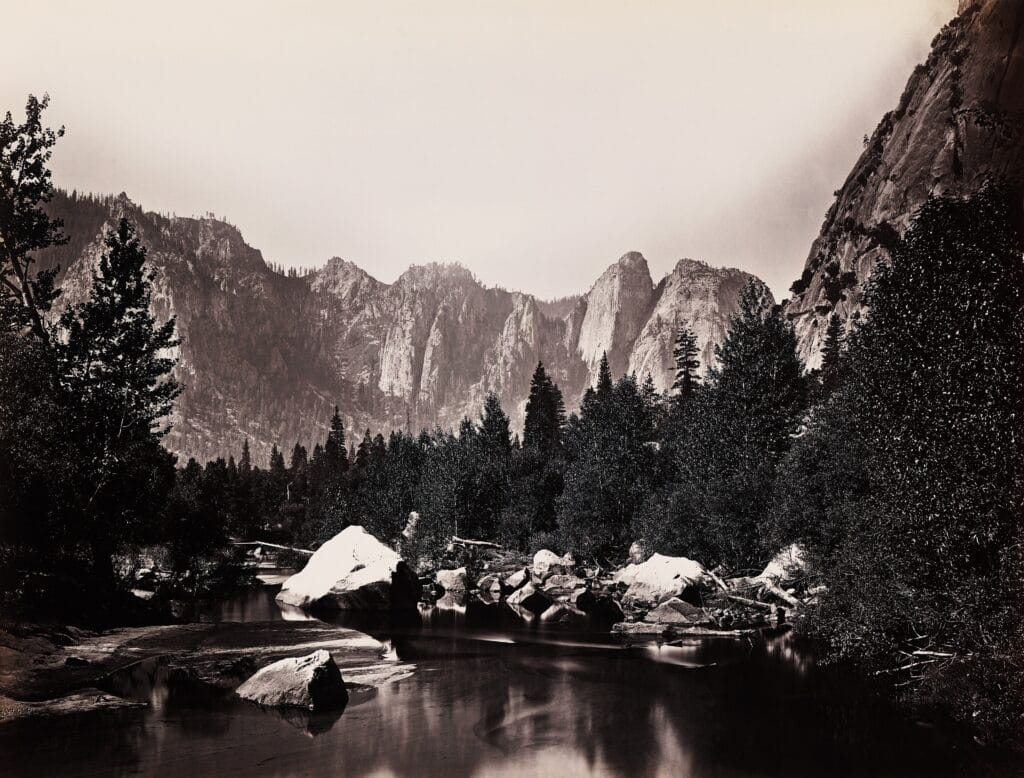
The book’s famous sentence arrives early, tossed off the way true discoveries usually are:
When we try to pick out anything by itself, we find it hitched to everything else in the universe.
Ecology would not exist as a named science for decades; here it is anyway, complete, in a sentence a shepherd wrote after dinner. What is easy to miss is the verb. Hitched is a working word — a word for wagons and harness, for things fastened so they can pull together. Muir’s universe is not a static web but a team in motion, and the naturalist’s job is not to admire the knots but to feel the tug: touch one thing honestly and everything connected to it shifts a little in response.
The journal form matters here. Because the book keeps the shape of days, its subject is not scenery but the experience of being changed by scenery — the same mountains, entered again each morning, read differently as the reader deepens:
We are now in the mountains and they are in us, kindling enthusiasm, making every nerve quiver, filling every pore and cell of us.
The Long Time of Trees
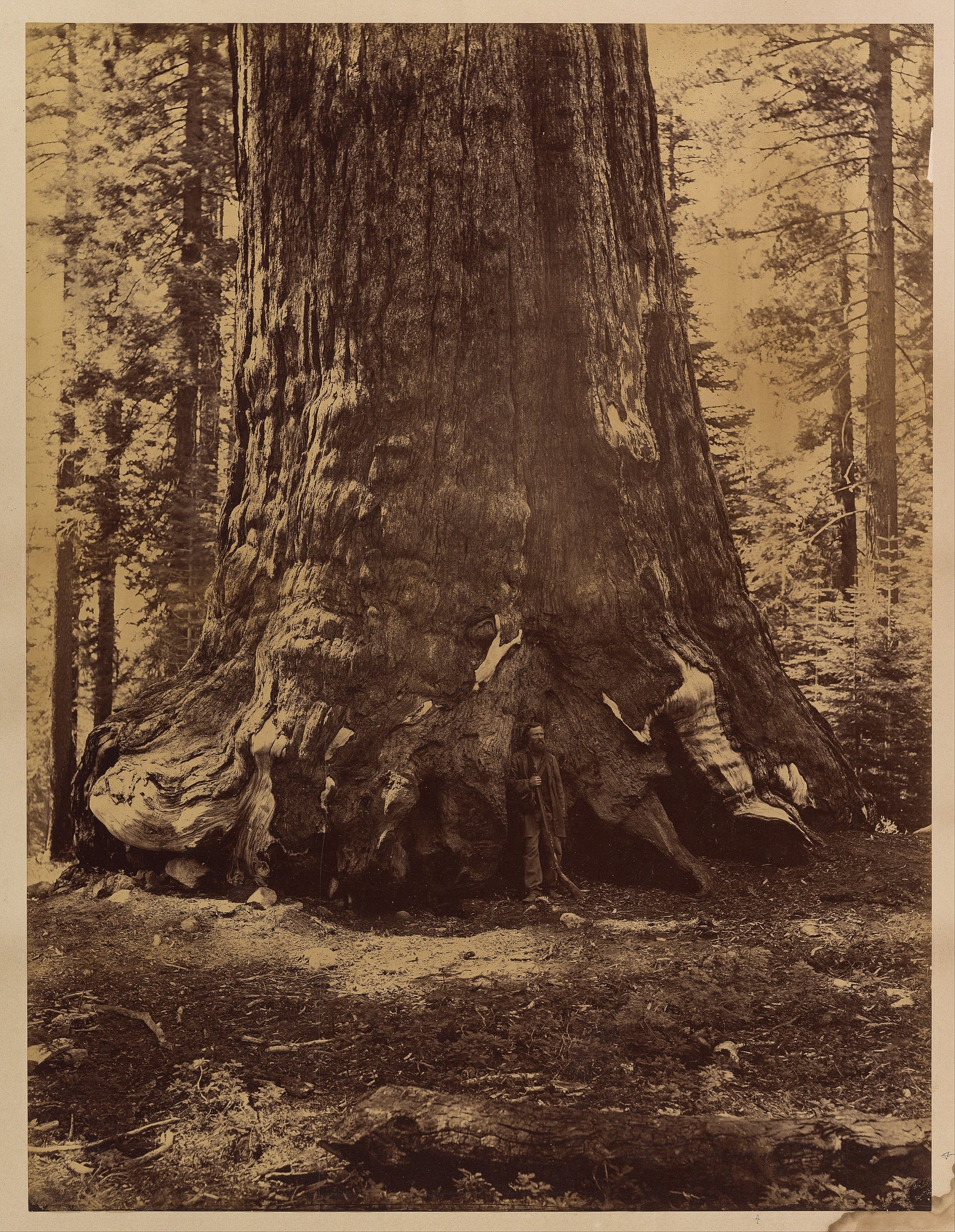
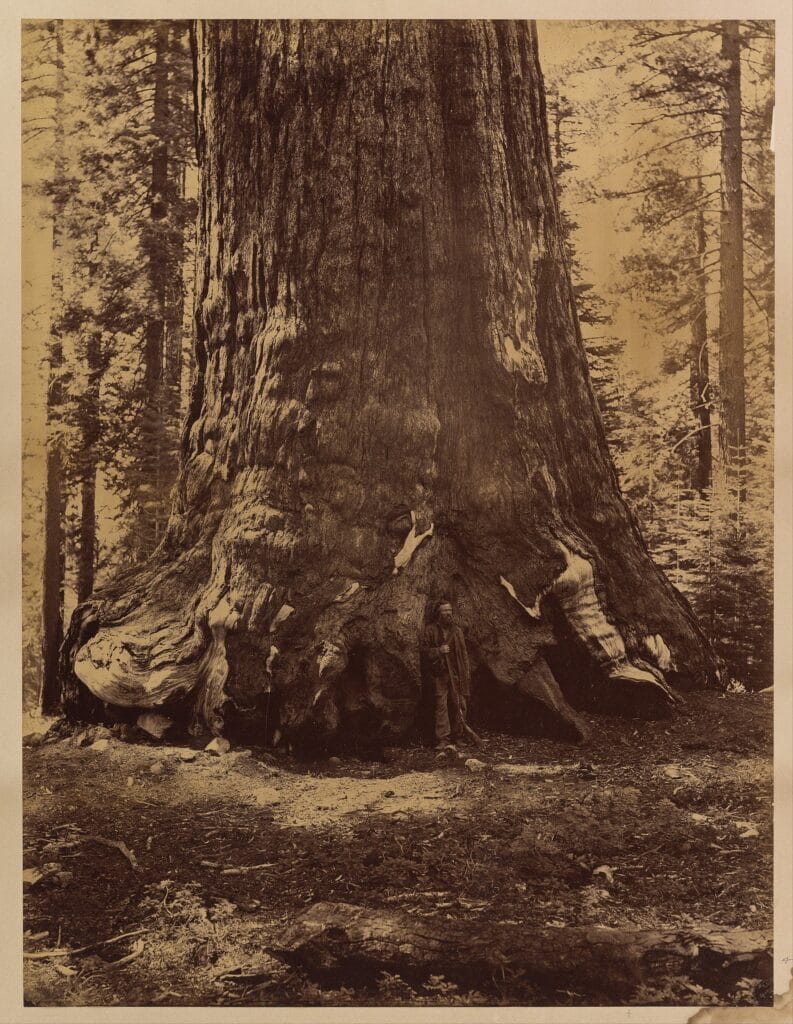
Then there are the sequoias — the summer’s true event. Muir walks among trees that were seedlings before Rome, and the encounter rearranges his sense of scale in both directions at once. Against the trees, a human life shortens to an afternoon; but the trees also lengthen the afternoon, because time spent inside their kind of time stops feeling scarce. He describes lying at the foot of one of the giants and looking up along the trunk the way one looks up a cliff, and confesses the disorientation plainly:
No description can give any adequate idea of their singular majesty, much less of their beauty.
A tree, Muir understood, is a kind of clock — but a clock that runs on the century hand. Its rings archive drought and fire; its scars are dated entries; a grove is a library of local time kept by beings with no interest in our deadlines. To walk into the Mariposa Grove is to consult a record that was being written continuously while every human thing we call history happened elsewhere, and to be reminded that elsewhere is a matter of perspective. The wild, on this reading, is not merely space that we have not yet developed. It is time that we have not yet spent — duration still running at its own pace, unhurried by us, indifferent to the quarter and the news cycle.
![Cape Horn, Columbia River, Oregon, 1867 mammoth plate albumen print, 27-3:4 x 21-1:2 inches (mount) [70.5 x 54.6 cm]](https://somewhatmundane.com/wp-content/uploads/2026/08/Cape-Horn-Columbia-River-Oregon-1867-mammoth-plate-albumen-print-27-34-x-21-12-inches-mount-70.5-x-54.6-cm-781x1024.webp)
That summer set the course for everything after: the essays, the crusades, the presidents dragged camping, the national parks. But the book itself is curiously free of agenda. It records a conversion, not a campaign — the season in which a man found the fixed point his life would afterward orbit. And its usefulness now may be exactly its refusal to hurry. Muir looked at a mountain range the way he looked at a single bee, with the patient assumption that attention would be repaid, and it was: the range disclosed itself as one connected, breathing thing, and disclosed the observer as part of it.
The instruction hiding in the happiness is the sentence about hitching. If everything is fastened to everything, then nothing honestly attended to is trivial — the sheep-bitten meadow is a fair door into the whole, and so is the water ouzel, and so is the reader’s own backyard maple, keeping its slower ledger over the parked cars. The grandeur is not somewhere else. It is the system showing through at whatever point you consent to look closely, for longer than is convenient, at the nearest hitched thing.
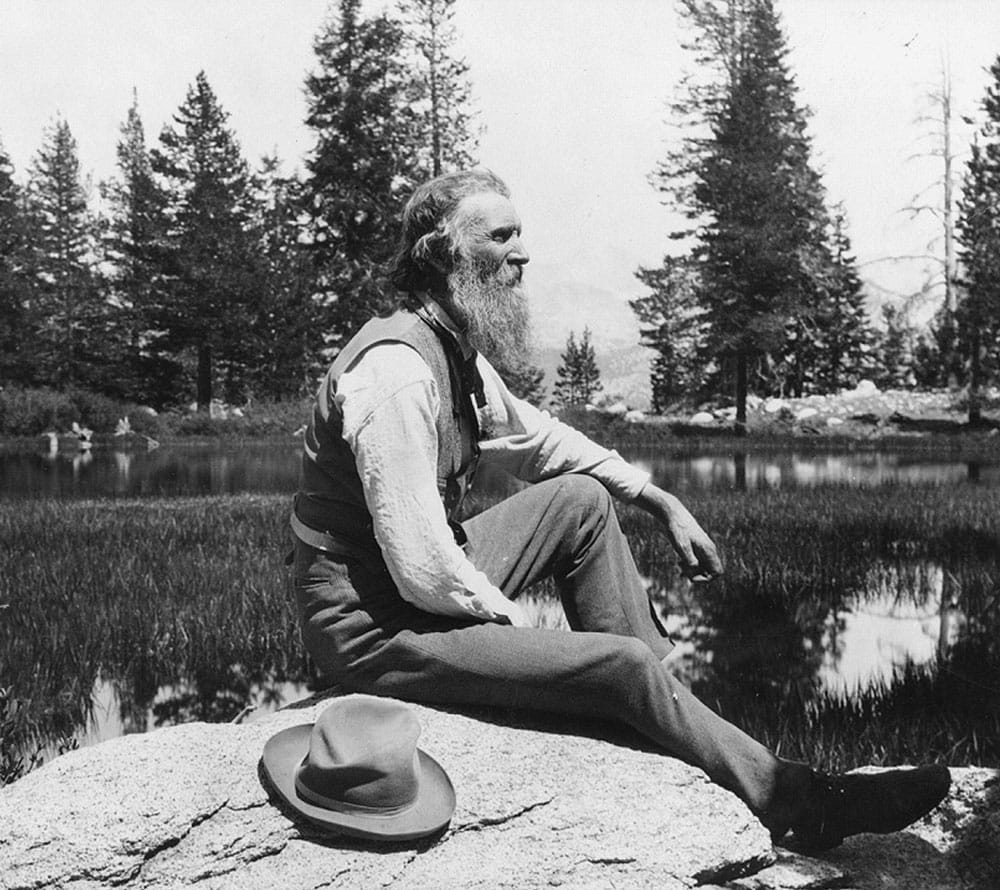
My First Summer in the Sierra (1911) is in the public domain and free to read in full at Project Gutenberg.