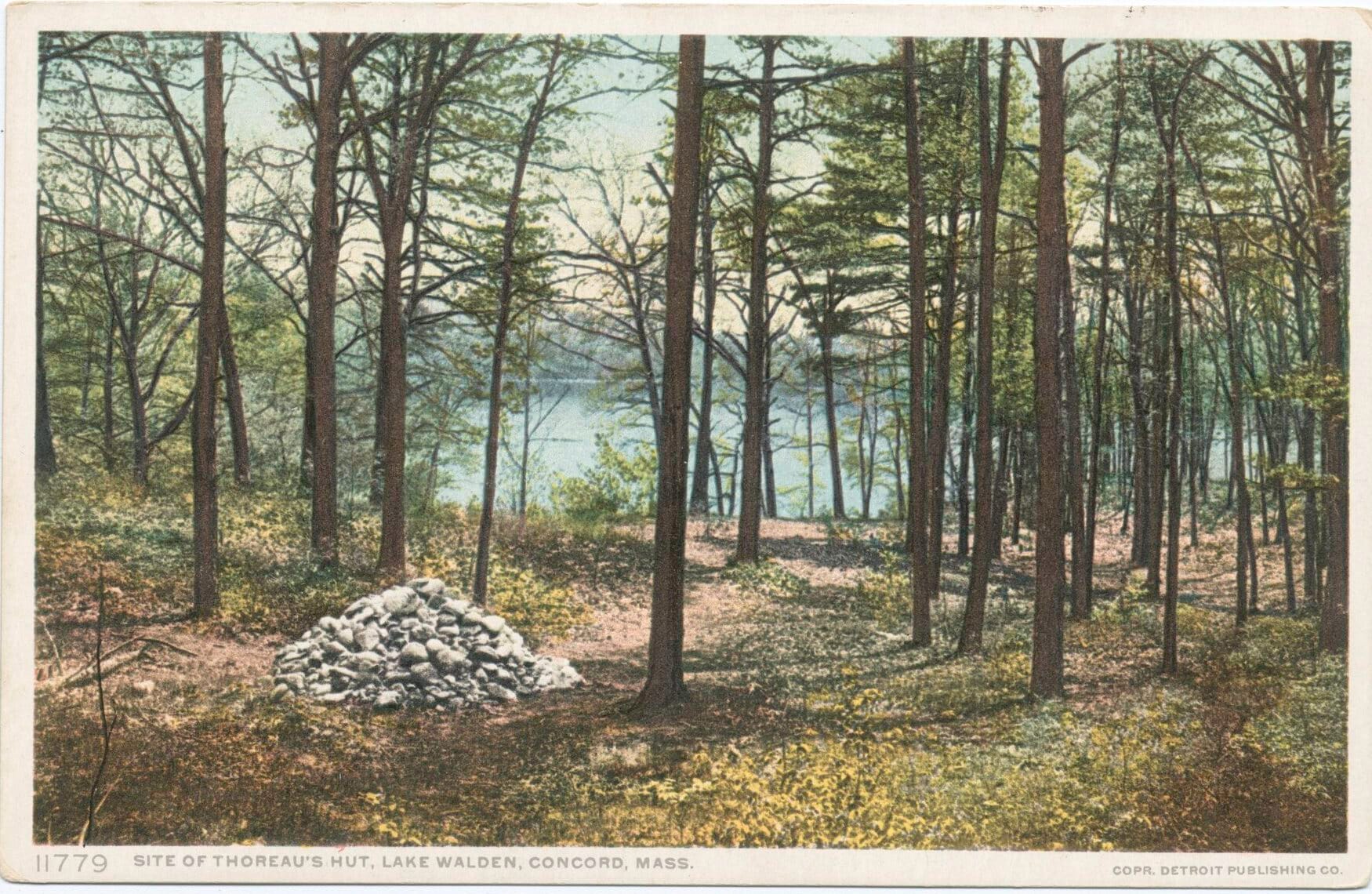
We remember Thoreau as an eye — the man who saw the pond, the ant war, the thaw. But open Walden to its quietest chapter and you find an ear. “Sounds” is the book’s audio track: trains, church bells, whip-poor-wills, a distant unknown bird, the creak of the house itself — an inventory of everything audible from one cabin, taken by a man who treated hearing as a discipline with standards.
The chapter’s governing claim arrives like a tuning note:
All sound heard at the greatest possible distance produces one and the same effect, a vibration of the universal lyre.
Distance, Thoreau noticed, is a kind of instrument. Up close, a bell is a bell and a train is a train — each sound wears its origin like a uniform. But carried far enough through air and over water, the origins blur and something common comes forward: a hum beneath the particulars, as if every noise were one string of a single strung world. This is physics wearing metaphysics’ coat, or the reverse; with Thoreau it is never quite settled, which is the pleasure of him.
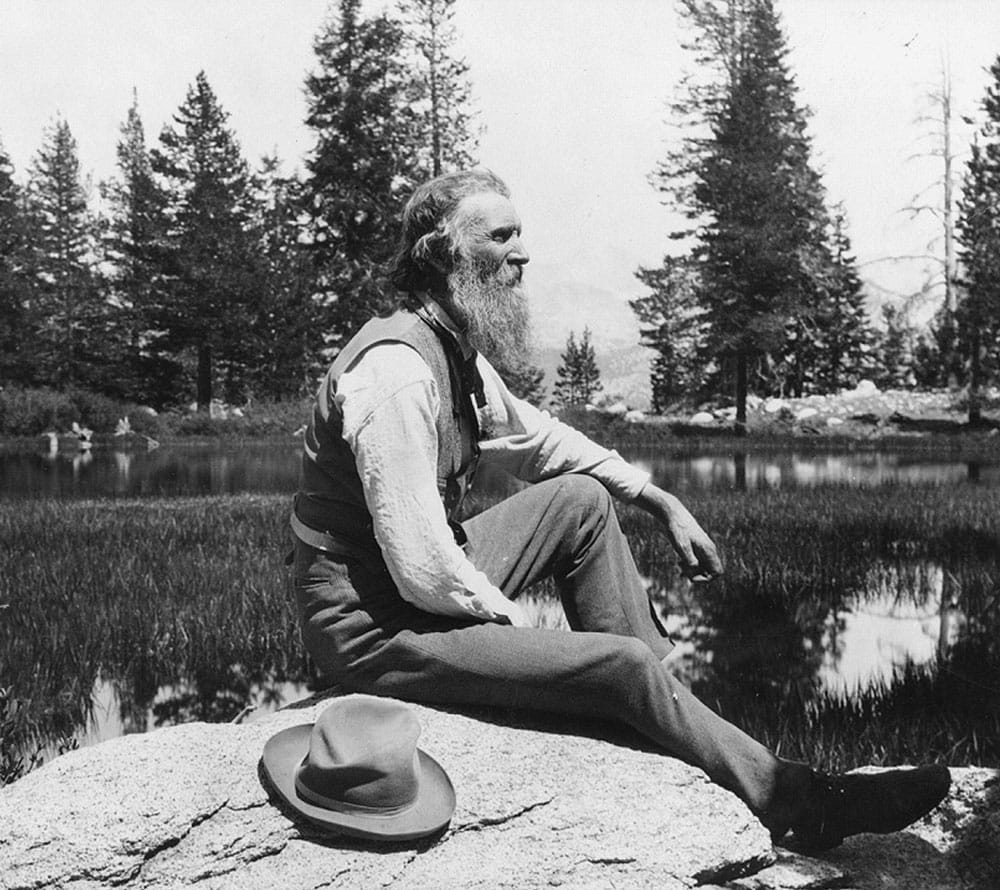
What makes the chapter a practice rather than a poem is how deliberately he worked at it. The journal — the daily instrument behind all the books — is full of listening entries: standing still to sort the layers of a soundscape, noting which birds sing at which hours, returning night after night to the same field to learn its acoustics the way a musician learns a hall. His most famous sentence about perception was aimed at the eye:
The question is not what you look at, but what you see.
But the journal shows he held the ear to the same standard. The question is not what you hear — everyone within range hears the same air — but what you listen to: which sounds you admit past the mind’s doorman, and how long you let them stay. Most of what reached his cabin, he understood, reached everyone else in Concord too. The difference was custody. He took sounds in and kept them, turned them over for a paragraph, let a bell heard across the water become a fact about distance, weather, memory, and the hour, all at once.
That custody is rarer now, not because the world got louder — Concord’s train was plenty loud — but because the doorman got busier. To read “Sounds” today is to be handed a standing invitation whose terms have not changed: the universal lyre is still strung, still sounding, and the price of admission is the same willingness to be quiet that it always was. Sit anywhere long enough and the layers begin to separate — the near, the middle, the barely-there — and beneath them, on the right evening, the hum that made a surveyor by trade write like a man who had overheard the world tuning itself.
The ear, Thoreau’s example insists, is not a passive organ that hearing happens to. It is an instrument that improves with practice, and the practice is free, and the concert has been in progress the whole time. ◆
Both Walden (1854) and Thoreau’s journals are in the public domain and free to read at Project Gutenberg.