The last book Charles Darwin published, six months before his death, was not a summation of the grand theory or a final word on our descent. It was a monograph on earthworms. The Formation of Vegetable Mould, through the Action of Worms, with Observations on their Habits (1881) sounds like a parody of Victorian science, and Darwin knew it — he called the subject small and apologized, more or less sincerely, for the years spent on it. The public disagreed: the worm book sold briskly, faster at first than On the Origin of Species had, as if readers sensed that something important was being said under the cover of something ridiculous.
It had been a forty-year courtship. Darwin had put worms before the Geological Society as a young man in 1837 and never really stopped watching them. At Down House the whole family was conscripted into the research: pots of worms in the study, flagstones monitored for decades to see how fast castings buried them, and — most cheerfully — experiments to test the worms’ senses, in which worms were subjected to the bassoon, the piano, and shouting, and were found indifferent to all three, though exquisitely sensitive to vibration through the ground. It is science conducted at the pace of a garden: patient, domestic, faintly absurd, and cumulatively devastating.
The Plow Before the Plow
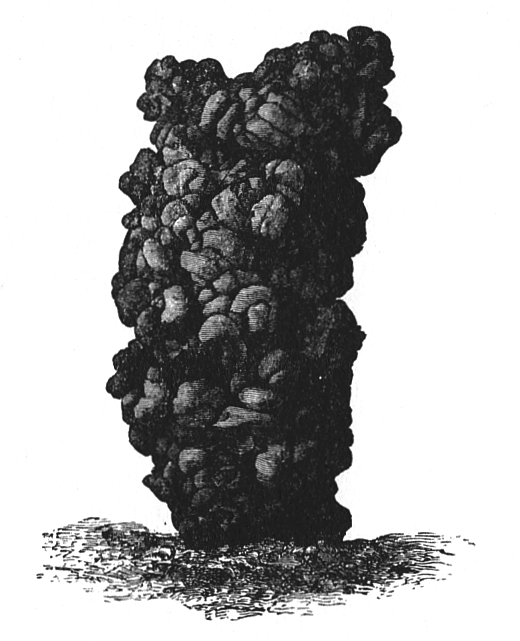
Because what the decades of watching added up to was a reversal of scale. The worm, Darwin showed, is a geological force. Working blindly, a few inches at a time, worms swallow and cast up earth in such quantities that they bury the surface of history — Roman villas, fallen stones, whole pavements sink gradually into ground the worms are forever passing through themselves. They aerate, they drain, they grind, they compost; the fine tilth we call topsoil, the very ground of agriculture, is to a startling degree their manufacture. His closing verdict has the cadence of a man who knows exactly how strange it sounds:
It may be doubted whether there are many other animals which have played so important a part in the history of the world, as have these lowly organised creatures.
The plow, he noted, is among the most ancient of human inventions — but the land was plowed long before us, and is plowed still, by the original workers underfoot.
There is a method hiding in the monograph, and it is the same one that governs any practiced art of attention: the conviction that the overlooked is not the unimportant, merely the unwatched. Darwin’s genius was never speed; it was duration. He was willing to attend to one small thing for longer than anyone else thought reasonable — barnacles for eight years, orchids, climbing plants, worms for four decades — and duration kept paying out what a glance never could:
Worms have played a more important part in the history of the world than most persons would at first suppose.
At first suppose is the operative phrase. First suppositions are where most of us stop. The worm book is a demonstration of what lies past them: that beneath any lawn an unnoticed civilization is turning the earth, and that the world’s largest effects are compounded from its least glamorous labor. Nothing here contradicts the grandeur of the earlier books — it completes it. The tangled bank of the Origin‘s famous ending is built, we now learn, from below, by workers without eyes.
It is hard not to read the choice of final subject as a quiet self-portrait. A man who had moved the intellectual world spent his last strength honoring creatures that move the literal one, invisibly, an inch at a time. Small work, faithfully continued, is how ground gets made. He was describing the worms.
The worm book (1881) is in the public domain and free to read in full at Project Gutenberg.